
Main Train Stations in Turkey
Main Train Stations in Turkey
Turkish Railway Stations
Turkish railway stations serve as essential transport hubs for both locals and international travellers, providing a modern and efficient way to explore the country. Designed with convenience and comfort in mind, major stations across Turkey offer useful amenities such as ticket counters, luggage areas, cafés, ATMs, and clean restroom facilities. Many also feature comfortable waiting lounges, information desks, and digital departure boards to keep travellers updated. Conveniently located in city centres or near major attractions, Turkey's train stations ensure easy access and seamless connections, making rail travel a reliable and stress-free way to experience the country's diverse regions.
Turkish railway stations serve as essential transport hubs for both locals and international travellers, providing a modern and efficient way to explore the country. Designed with convenience and comfort in mind, major stations across Turkey offer useful amenities such as ticket counters, luggage areas, cafés, ATMs, and clean restroom facilities. Many also feature comfortable waiting lounges, information desks, and digital departure boards to keep travellers updated. Conveniently located in city centres or near major attractions, Turkey's train stations ensure easy access and seamless connections, making rail travel a reliable and stress-free way to experience the country's diverse regions.


Larger stations typically provide free Wi-Fi and charging points, allowing travellers to stay connected while waiting for their departure. Signage at most major stations is bilingual, displayed in both Turkish and English, which makes navigation considerably easier for foreign visitors. Security checks, including baggage scanning, are standard practice at high-speed rail stations, similar to airport procedures. Many stations also have dedicated staff or customer service desks who can assist with ticket changes, route information, and general travel queries. Accessibility features such as ramps, elevators, and tactile pathways are increasingly common, particularly at newer or recently renovated stations. Some of the busiest hubs, including Istanbul, Ankara, and Izmir, are directly connected to shopping centres or commercial complexes, adding extra convenience for travellers with time to spare. Parking facilities are usually available at suburban and intercity stations, making it easier for those arriving by car to continue their journey by train.
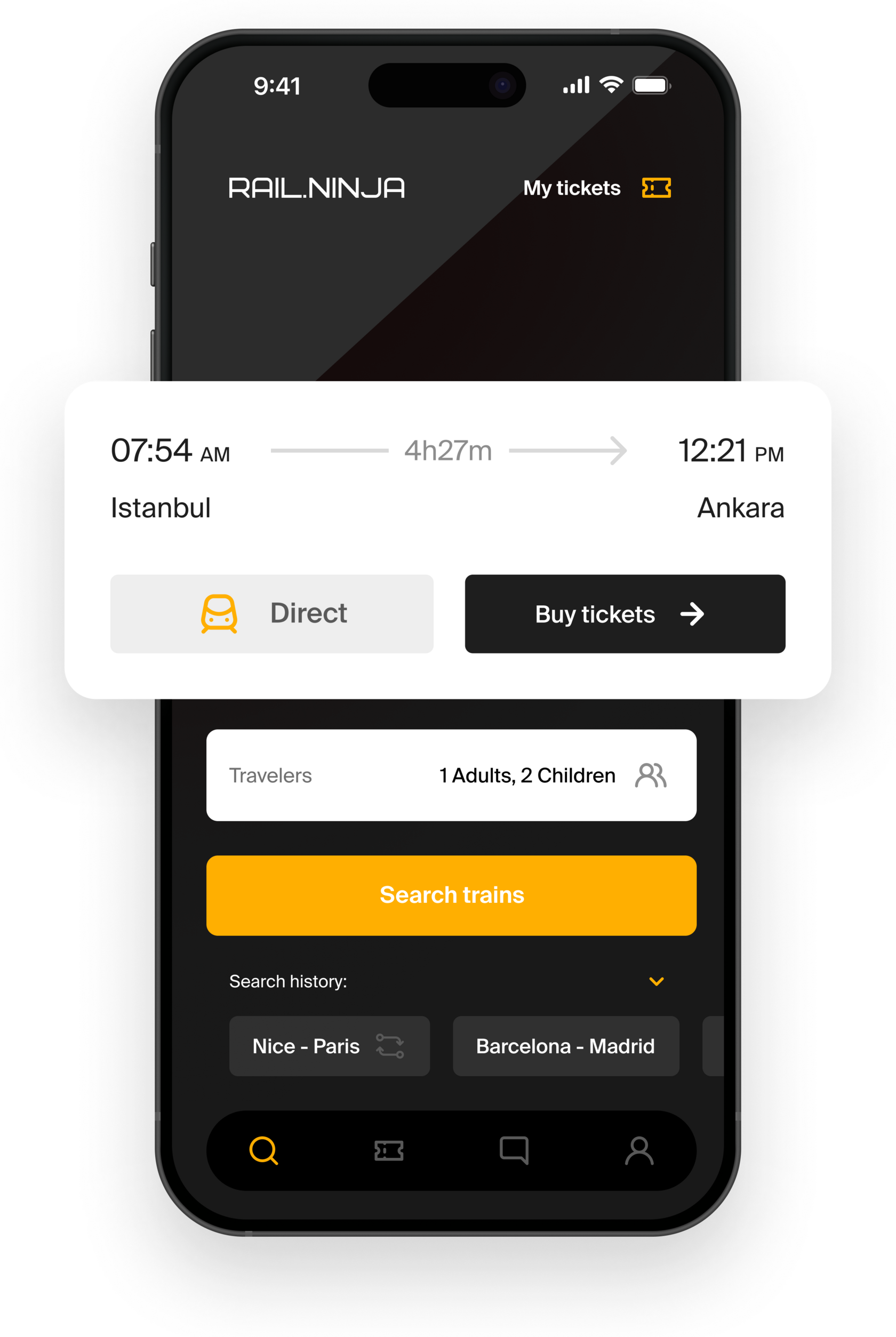
Try the new Rail Ninja App today
Get our free app to book & manage your trips on the go
What to Know About Main Train Stations in Turkey
Istanbul has two key stations: Sirkeci Terminal on the European side, and Halkalı and Söğütlüçeşme on the Asian side, which now handle most intercity and international services since Haydarpaşa's main terminal role changed.
Ankara Gar is the capital's central station, consisting of the original 1937 building used by regional trains and a modern high-speed (YHT) station connected by footbridge, both linked to the city's airport and bus terminal.
Yes, several stations combine transport with heritage, including Adana Station (built in 1912), Alsancak Station in İzmir (opened in 1858), and Kars Station, known for its Baltic-style architecture from the late 1800s.
Yes, major hubs such as Ankara Gar feature multiple ticket offices, consultation and tourism information desks, and easy access to taxis and buses connecting to airports and other transport terminals.
Many major stations, including Ankara and Eskişehir, have modern sections dedicated to YHT high-speed trains, reflecting Turkey's growing high-speed rail network that connects key cities like Istanbul, Ankara, and Konya.
Main Train Stations in Turkey
Main Train Stations in Turkey